
Anti-Aging & Longevity
Epitalon
Telomerase-activating peptide for cellular rejuvenation and longevity support.
Most people searching to buy Epitalon Europe start with a peptide. Yet, the research starts with a question: which cellular processes change most as we age? Telomeres, extracellular matrix function, and mitochondria are three frequently studied answers. Below, you'll find the peptides most commonly associated with each area and the research that supports their investigation.
Researchers do not view aging as a single process. Instead, it involves multiple biological mechanisms that change over time. In the widely cited “Hallmarks of Aging” framework, telomere attrition (shortening of the protective DNA caps at chromosome ends) and mitochondrial dysfunction (declining efficiency of the cell’s energy-producing structures) are recognized as key features of biological aging.
Because these processes influence various elements of cellular function, they are often studied individually in research settings. Several longevity peptides have been studied for their possible significance to each region, which allowed researchers to investigate different biological pathways within a larger aging-related framework.
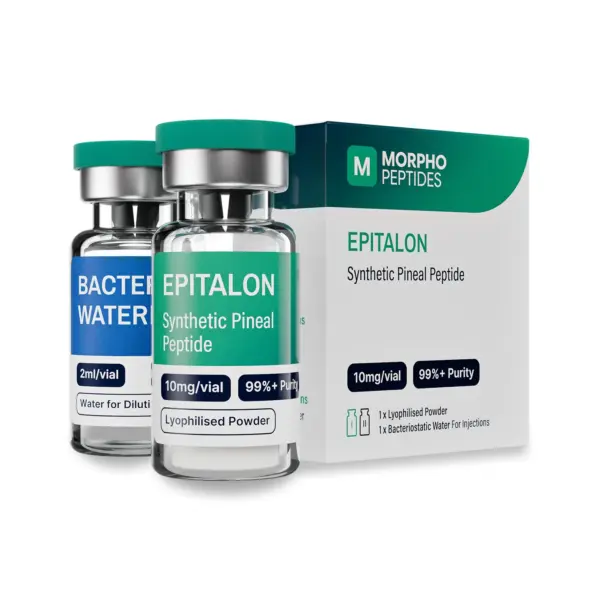
Epitalon (also known as Epithalon) is a synthetic tetrapeptide derived from research on epithalamin, a peptide complex obtained from the pineal gland. Epitalon is frequently referenced in telomerase peptide research because researchers have investigated its effects on telomerase activity, the enzymatic process involved in maintaining telomeres (protective DNA sequences located at the ends of chromosomes).
Telomeres typically shorten as cells divide. When they become critically short, cells may enter senescence (a state in which they stop dividing) or undergo programmed cell death. Because of this, telomere biology is a major area of longevity research.
In a 2003 cell-culture study, researchers reported that Epitalon increased telomerase activity and promoted telomere elongation in human somatic cells. Animal studies have also reported longevity-related effects, including a 13.3% increase in the lifetime of the longest-living mice in one research. Researchers have also looked at its effects on melatonin release and circadian rhythms (the body’s internal 24-hour clock).
What this means for you: If your interest is how long cells can continue functioning as they age, Epitalon has been investigated in telomere and longevity research for more than two decades.
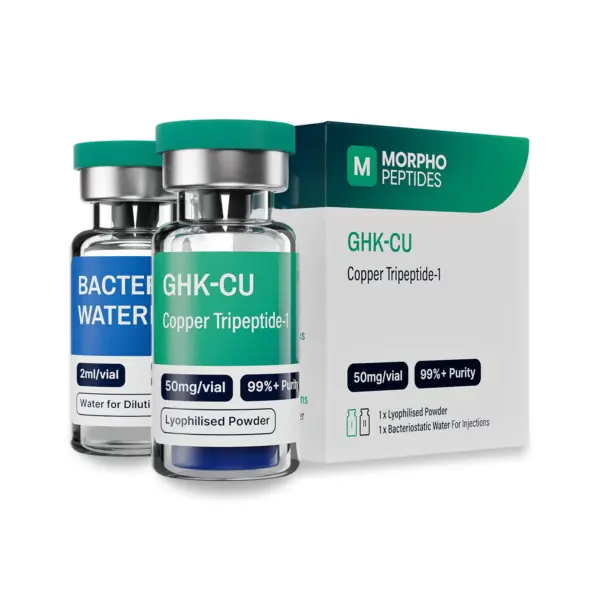
GHK-Cu (Glycyl-L-Histidyl-L-Lysine Copper) is a naturally occurring copper-binding tripeptide found in human plasma, saliva, and urine. Reported plasma levels decline with age, from approximately 200 ng/mL at age 20 to 80 ng/mL by age 60. This decline coincides with age-related reductions in tissue repair and regenerative capacity, making GHK-Cu a subject of interest in skin-aging research.
Research has shown that GHK-Cu influences thousands of human genes, including those involved in tissue remodeling, antioxidant defense, and inflammation. Studies have also examined its effects on collagen production, extracellular matrix components, angiogenesis (the formation of new blood vessels), and wound-healing processes.
A review published by Pickart and Margolina found that GHK-Cu influenced around 31% of the human genes studied in gene-expression databases, raising expression in certain pathways while decreasing others. Because of its extensive biological action, the peptide continues to attract research interest in skin aging and regenerative medicine.
What this means for you: While Epitalon research focuses on cellular lifespan, GHK-Cu research focuses on tissue structure. Researchers study it for its relationship with collagen, connective tissue, and extracellular matrix biology. Feel free to explore our Knowledge Hub if you’re interested in the science behind the GHK-Cu copper peptide.
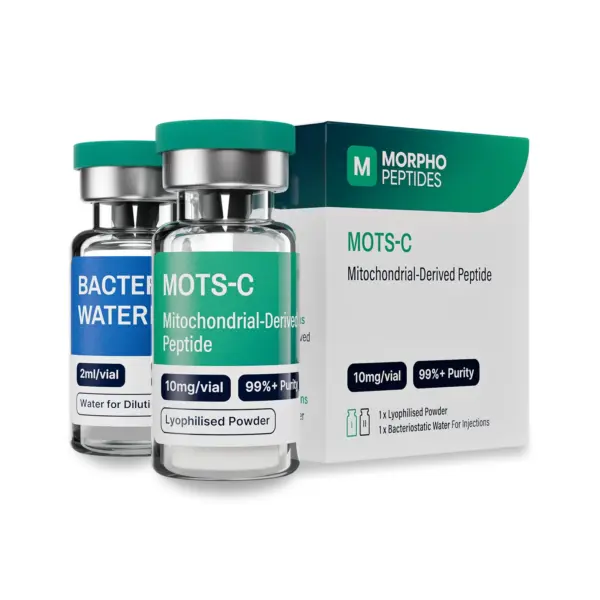
MOTS-c is a mitochondrial-derived peptide encoded in mitochondrial DNA, not nuclear DNA. Because mitochondria provide cellular energy, researchers investigate MOTS-c as a signaling molecule involved in metabolic control and healthy aging.
MOTS-c has been found in laboratory and animal studies to activate AMPK (adenosine monophosphate-activated protein kinase, a critical cellular energy sensor) and impact glucose metabolism and fatty acid utilization pathways. In animal models, researchers have also shown increases in insulin sensitivity, metabolic function, and physical performance.
What this means for you: If Epitalon research focuses on cellular lifespan and GHK-Cu research focuses on tissue structure, MOTS-c research focuses on energy production. Current studies examine how it influences mitochondrial function and metabolic regulation as cells age.
The three peptides discussed above are associated with different areas of aging research. The table below summarizes their primary research focus.
| If your interest is… | Researchers often study… | Peptide |
| Cellular lifespan | Telomere maintenance and telomerase activity | Epitalon |
| Tissue structure | Collagen production and extracellular matrix biology | GHK-Cu |
| Cellular energy production | Mitochondrial function and metabolic regulation | MOTS-c |
Viewed collectively, Epitalon, GHK-Cu, and MOTS-c are all investigated for their roles in three different fields of aging research: telomere preservation, extracellular matrix biology, and mitochondrial function. Together, they provide a framework for exploring different cellular pathways linked to age-related biological change.
MorphoPeptides supplies all three longevity peptides at ≥98% purity, verified through third-party testing. Each product includes a batch-specific Certificate of Analysis, and orders are dispatched from within the EU.